Neptune and Company is advancing the State-of-the-Art in continuous real-time aquatic toxicity detection with the deployment of its cutting-edge Bivalve Toxicity Detection System (BTDS), an innovative integration of bio-sensing organisms, advanced statistical algorithms, modern sensing technologies, and custom-developed data visualization and communications software. Unlike intermittent, costly, and labor-intensive traditional sampling that risks missing sporadic contamination events, the Neptune BTDS is designed to detect and alert operators to aquatic toxicity with context-rich alerts in real time. The system provides a powerful and cost-effective first line of defense for municipal water treatment facilities. Its patent-pending statistical approach significantly reduces false positives and enables rapid, data-driven operational responses to reduce operator fatigue.
Within a Minneapolis Water Treatment and Distribution Services (MWTDS) facility, an active BTDS now provides Minneapolis Water with a high-ROI solution that protects treatment infrastructure from catastrophic damage, prevents costly emergency shutdowns, and provides a rigorous, long-term public health safeguard.
____________________________________________________________________________________________________
“For the City of Minneapolis, this robust water quality monitoring solution actively protects our 500,000 customers, ensuring that they have safe drinking water. The benefit of the biomonitoring system is that it provides 24/7, real-time monitoring of the river, which allows us to take action immediately if the water quality parameters change significantly, indicating a contamination event.”
– George Kraynick, Manager of Water Quality and Laboratory Services, MWTDS
____________________________________________________________________________________________________
Neptune and Company, Inc. is proud to set the new standard for Biological Early Warning Systems (BEWS) across the nation.
System Overview and Advantages of the BTDS
Traditional water sampling can be costly and relies on intermittent checks that risk missing sporadic and acute contamination events. The BTDS resolves this by utilizing living bivalve organisms (mussels or clams) as its aquatic “canaries in the coal mine”, capable of accounting for the complex additive, synergistic, or antagonistic effects of various chemical conditions that may reduce or amplify toxicity.
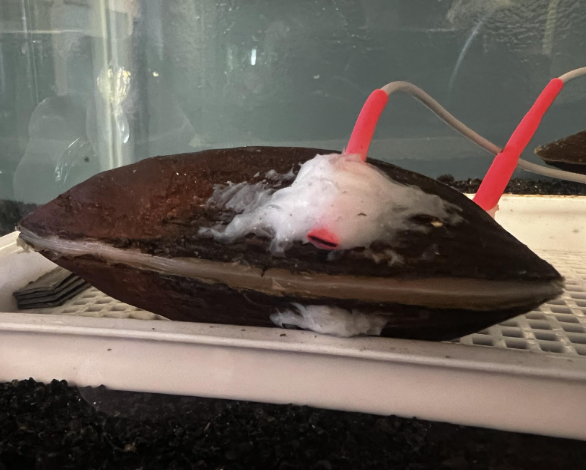
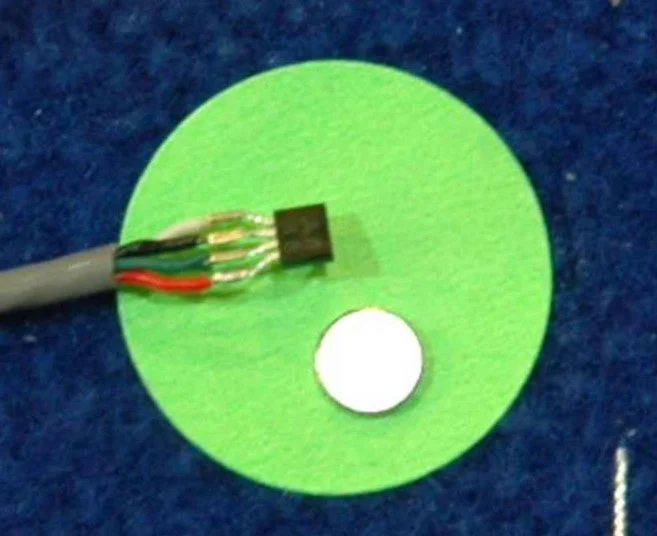
Hall Effect sensors and magnets attached to each bivalve’s opposing shells precisely measure their opening or "shell gape", up to ten times every second. Bivalves naturally open their shells while happily feeding and filtering, and close their shells when exposed to aquatic toxicity; the sensors’ high-resolution monitoring detects these rapid yet subtle changes in behavior. Simultaneous real-time evaluation of water quality data from an EXO3 sonde and spectro::lyser™ V3 probe further enhances the system’s overall accuracy and significantly improves the utility of system outputs with context-rich insights.
Traditional water sampling can be costly and relies on intermittent checks that risk missing sporadic and acute contamination events. The BTDS resolves this by utilizing living bivalve organisms (mussels or clams) as its aquatic “canaries in the coal mine”, capable of accounting for the complex additive, synergistic, or antagonistic effects of various chemical conditions that may reduce or amplify toxicity. Hall Effect sensors and magnets attached to each bivalve’s opposing shells precisely measure their opening or "shell gape", up to ten times every second. Bivalves naturally open their shells while happily feeding and filtering, and close their shells when exposed to aquatic toxicity; the sensors’ high-resolution monitoring detects these rapid yet subtle changes in behavior. Simultaneous real-time evaluation of water quality data from an EXO3 sonde and spectro::lyser™ V3 probe further enhances the system’s overall accuracy and significantly improves the utility of system outputs with context-rich insights.
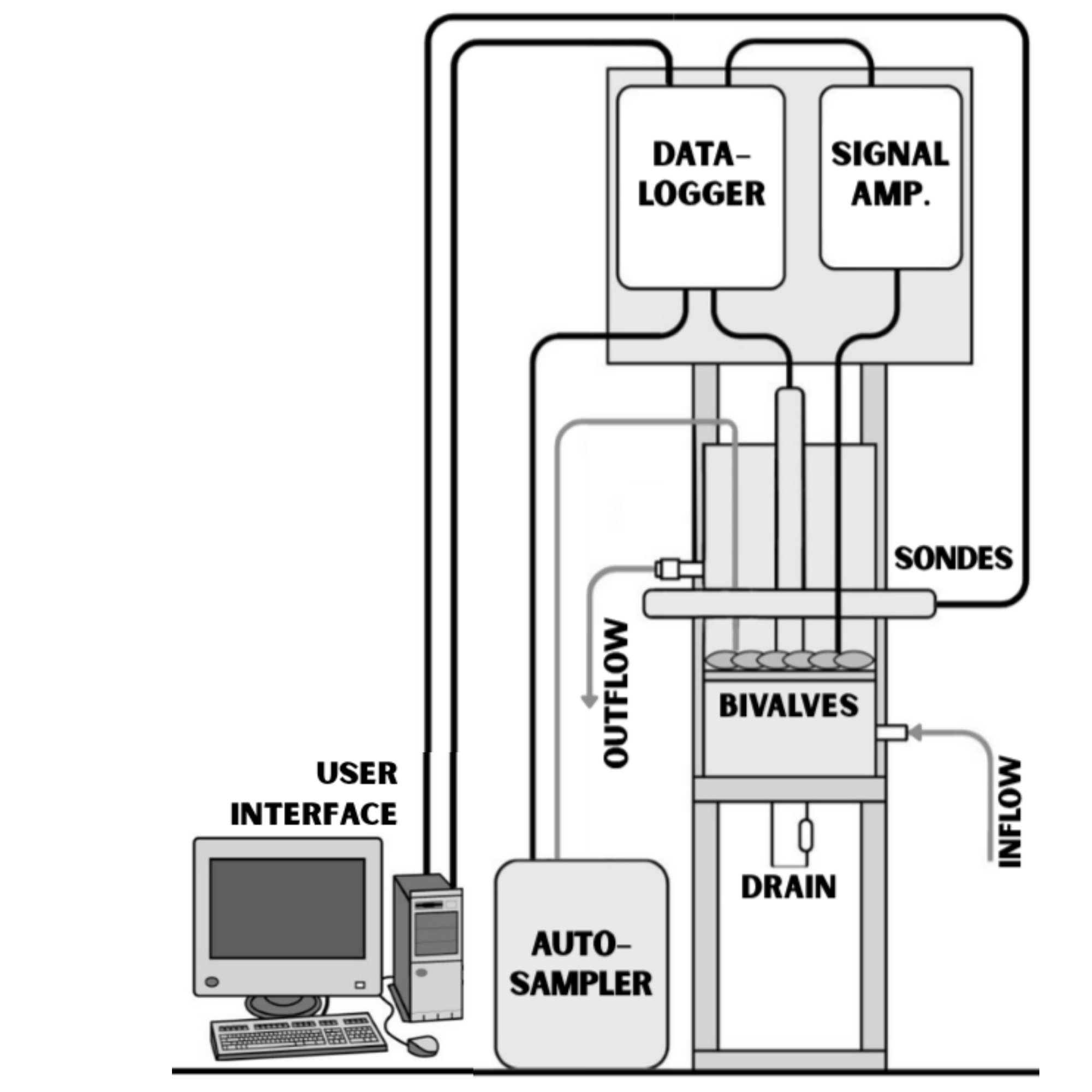
The BTDS Algorithm (patent pending) models expected bivalve behaviors at individual, subgroup, and population-wide levels in a complex statistical state-space that incorporates multiple measures of shell gape and variability over time. The Algorithm’s integration of real-time data ingestion, multi-scale behavioral modeling, and automated alerting and data visualization represents the brains behind the BTDS. It is the primary differentiator between relatively traditional monitoring and more holistic, continuous toxicity detection. A highly customizable BTDS “Dashboard” then promptly packages the data into intuitive, actionable information across all system notifications and automated reports.
Key advantages include:
Cost-Effective and Comprehensive: The BTDS costs less than typical gas chromatography mass spectrometry (GC-MS) systems, while providing a holistic indicator of toxicity.
Unparalleled Sensitivity and Accuracy: State-of-the-art, patent-pending algorithms and custom software continuously assess live data against historical environmental baselines and real-time physico-chemical parameters. Precise computations in a statistical state-space significantly reduce false positives and classify anomalies with context-specific intelligence.
Ease of Use: The BTDS requires simple operation with minimal training and maintenance. It features intuitive user-configurable dashboards and escalation procedures that notify staff via email, text, or voice call depending on their shifts or “on-call” status.
Real-time Data Visualization and Reporting: a custom web-based application enables interactive data viewing and automatic communication of intuitive outputs, facilitating rapid operational response measures.
Safeguarding Minneapolis’ Water Treatment and Distribution Facility
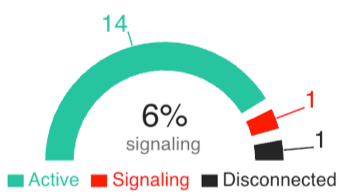
The value of the BTDS is on full display in Minneapolis, MN, where the city treats and distributes approximately 22 billion gallons of raw water from the Mississippi River each year to its residents. Minneapolis Water Treatment and Distribution Services (MWTDS) utilizes a BTDS system featuring 15 mussels living in a tank through which raw river water is continuously cycled.
Neptune and Company collaborated with the City of Minneapolis and BadgerMeter (Milwaukee, WI) to pair the mussels with a spectro::lyser V3™ spectrometer probe, which utilizes UV-Vis spectrometry across the full range (200-720 nm) for precise measurement of various parameters in surface water. This integrated instrumentation provides comprehensive water quality data, including the potential to identify specific contaminant signatures via a chemical “fingerprint” to rapidly validate alarms triggered by mussels' behaviors. When the system’s algorithm detects a toxicity event, prompt context-rich alerts are immediately sent to plant operators, alerting them to conditions that may require critical operational responses. This enables faster, more confident decision-making, thereby reducing operator fatigue and more effectively avoiding costs associated with shutdowns and infrastructure damage.
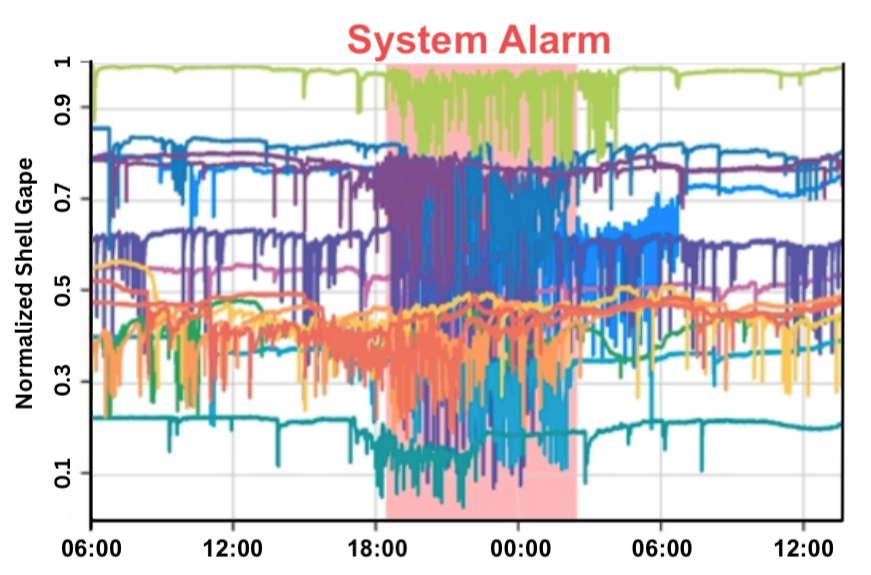
Flexing the BTDS’s Mussels
In late March 2026, MWTDS operators noticed an alarming iridescent sheen appearing on the river immediately upstream of the treatment facility where the BTDS is installed. This highly apparent visual indication of a contaminant allowed operators to proactively shut down and install protective booms on the river’s surface to redirect much of the contaminant away from their intakes. However, upon resuming operations, both traditional laboratory analyses and the BTDS indicated that some of the contaminant (later determined to consist of multiple hydrocarbon compounds consistent with fuel or a degreaser) did in fact get drawn into the treatment facility.
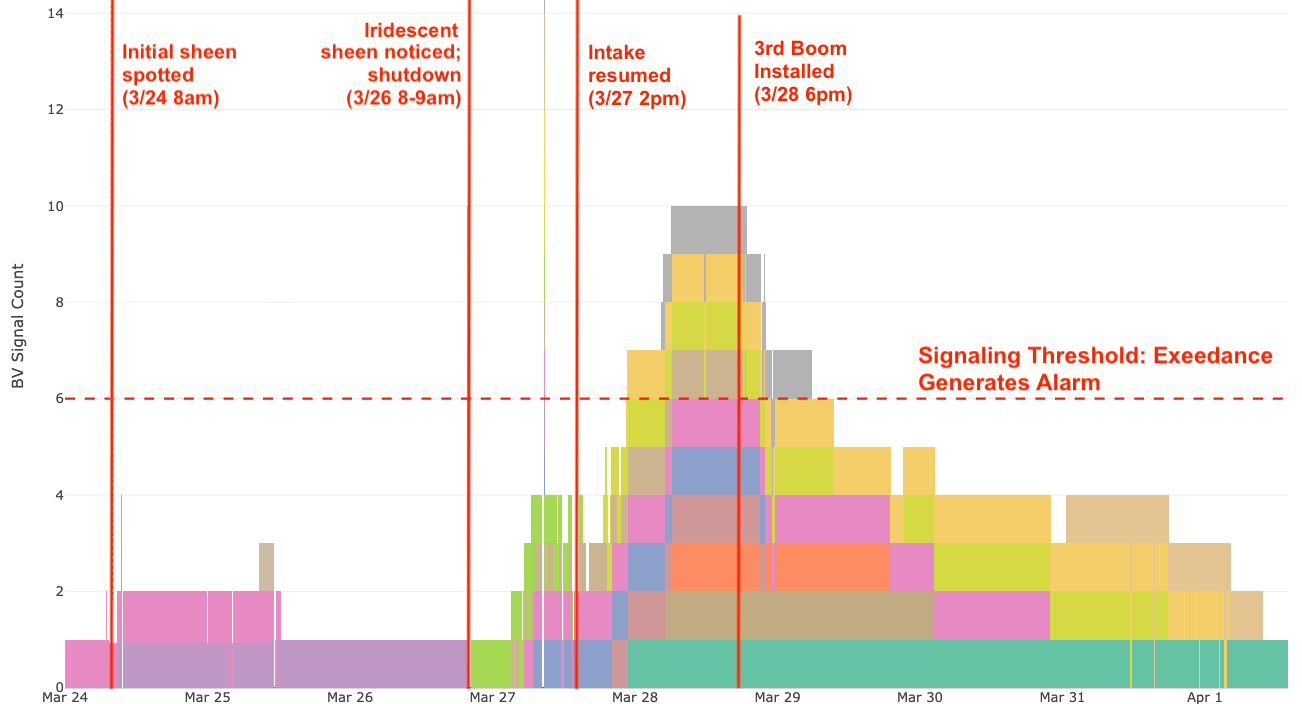
In this instance, operators were fortunate to have noticed clear visual evidence of a contaminant. Other documented spills involving more obscure contaminants across the country have led to millions of dollars in costs associated with both treatment facility repairs and public health concerns; the only monitoring mechanism capable of immediately alerting operators to such incidents is the BTDS.
For more information about the Bivalve Toxicity Detection System, please contact:
Sean Foorman | BTDS@neptuneinc.org | (719) 660-4978 (direct) or (720) 746-1803